
Written in collaboration with vets
- Homepage
- Blog
- Bonding & Care
- Why Do Cats Wag Their Tails Test
Why do cats wag their tails? The tell-tale signs of your cat’s mood

 Share
Share
Highlights
- Cats wag their tails as a form of communication, showing happiness, relaxation, interest, anger, fear or over-stimulation.
- The main reasons for tail wagging include: wanting interaction, being on the hunt, or showing that they’re feeling annoyed, scared, unwell, want to be left alone, or are in pain.
- The meaning of a cat’s wag depends on the speed, intensity, and position of the tail, alongside their overall demeanour.
A cat’s tail position is a feline mood barometer, used as a vital means of communication, and an important indicator for owners to judge how their cat is feeling. Understanding your cat's tail wagging language is fascinating, as there are so many reasons why cats wag their tails, depending on their situation or mood, from happiness to fear, anger, or wanting to be left in peace.
In this article, we’ll explore what it means when a cat wags its tail, uncovering some of the common cat wagging tail meanings and motivators, so you can recognise what their tail is telling you. By observing the subtle cat tail wagging signs - such as speed, intensity, position, and overall demeanour - you can become closer to your feline by responding to their needs accordingly.
What does it mean when a cat wags its tail?
A cat wagging its tail is a key indicator of how your cat is feeling, and navigating this feline body language will help you recognise a whole host of emotions - from playfulness to anger and contentment to fear. Understanding why your cat wags its tail means you’ll know when to lean in with care and support versus when to stand back and give these most independent of pets some space.
Do cats wag their tail when they are happy?
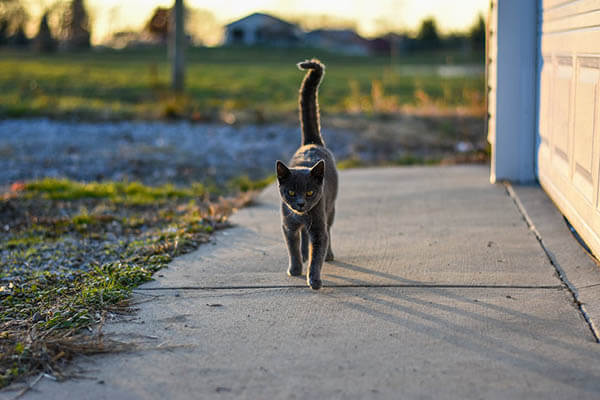
Yes, cats wag their tails when they are happy; whether as a warm greeting because they are pleased you are home, or they are enjoying the attention of being stroked. A happy wag of the tail is more likely to be slow and calm, with the tail held high in the air to signal confidence and contentment. A happy cat may also have a quivering tail, or very relaxed posture accompanied by purring, kneading, blinking slowly, enjoying their favourite food, or head butting.
Cats wag & flick their tails when they are unhappy
A flicking cat wagging tail meaning is very different to a contented wag. Irritation and anger are two of the emotions that your cat is likely to be feeling when their tail is held low and stiff, wagging in a sideways thrashing, or with a flick at the end of their tail or even a thump on the ground. If your cat displays this kind of body language when you’re petting them, it could be that your cat is wagging its tail because it is annoyed or over-stimulated and want you to stop and leave them alone.
Cats wag their tails slowly when content
A soft and slow cat wagging tail meaning can be that they’re feeling content. The slowness means that they are at peace with the world, and it’s time to relax, while the tail may also have a curved end as it gently swishes back and forth. Contentment can be the result of a delicious dinner, a pleasurable headbutt with you, or just curling up by a warm fire.
Cats wag their tails when hunting
You may be familiar with your cat wagging their tail at you, but what does it mean when a cat wags its tail when stalking prey? As consummate hunters, cats wag their tails when hunting, as it helps them to stay balanced before they pounce. Whether it’s watching a bird in a tree or focusing on an unsuspecting mouse, a cat’s tail swishing during hunting is a sign of concentration and is done quickly or even intermittently. Some believe that cats wag their tail during hunting because it’s a way of mesmerising their prey as they hone in on their victim!
Cats wag and wrap their tails to show affection
How cats show affection to owners, or even other animals in the family, includes wagging their tails like their canine counterparts. Although it is not the vigorous ‘helicopter’ motion of a dog, and often appears as a slow swish with the tail held high, it’s a sign that cats feel secure. A wrapping tail movement is also a sign of feline affection, and cats use their tail to envelope your arm, hand or leg in their love, often accompanying it with a warm purr.
Cats wag their tails when playing
You may notice your cat swishing their tail (or just twitching the end of it) when they’re playing with a toy, or if you’re holding a feather for them to grab. Interaction with other cats, or even a canine member of their family, can be judged as friendly if side-to-side cat tail wagging and relaxed body language are evident, as it indicates that your cat is ‘play-fighting’ rather than anything more serious.
Cats wag and fluff up their tails when threatened
What does it mean when a cat wags its tail while fluffing it out to its bushiest proportions? It is the same action that many animals do when they are threatened; your cat is trying to make itself appear larger to scare predators away. Stress hormones in response to a ‘fight or flight’ situation (from a loud bang to a real danger), contract the tiny muscles at the base of each hair follicle, known as arrector pili muscles, making their fur stand on end and appear twice its size. If that doesn’t frighten predators off, then nothing will!
Cats wag their tails while they are dreaming
Some sudden or gentle cat tail wagging or thumping whilst sleeping is likely to mean your pet is dreaming of hunting a bird, eating a delicious dinner, or even having an interaction with another cat in their territory. Cat behaviourists believe that, like other mammals with similar brain structures, cats experience REM sleep (the deepest sleep stage) when most dreams occur.
Cats wag their tails when you talk to them
Why do cats wag their tails in response to the sound of your voice? It is not only to acknowledge your interest in them but also to demonstrate that they’re excited to be interacting with you. Cat owners report that their cat recognises their owner's voice, which can be handy for calling them into the house and interaction. But, cats being cats, owners also report that their cat hears them but chooses to ignore them! Why not see if they respond when you call their name? It's good to practice around the house, and it helps with recall when you want them back indoors.
Summarizing the meanings of a cat wagging its tail
Cat wagging tail meanings can vary, depending on the situation and your cat’s overall body language. It’s important to consider their mood, what’s happening around them, and what might be causing them any upset or fear before deciding how best to approach them. In summary, what does it mean when a cat wags its tail in a certain way?
- Quivering tail - your cat might be happy, excited, or feeling territorial.
- Slow swaying tail - your cat is likely to be relaxed, feeling content, or observing something from afar.
- Twitching tail tip - your cat might be feeling playful or getting ready to hunt.
- Sudden flick, lashing or tail thump - your cat may be feeling irritated, over-stimulated or angry. Watch out for other angry responses, such as hissing and growling!
- Low ground wagging - cats wagging their tail with a crouched posture may be feeling uncomfortable. A drooping tail wag can also indicate feeling unwell.
- Puffed up tail - a very frightened or aggressive cat will puff their tail up when feeling threatened.
The fascinating world of your feline certainly doesn’t end with understanding why cats wag their tails so why not learn more from our blog, such as why cats purr, and be fully in tune with your cat’s emotions?
Cat wagging tail FAQs
Are cats happy when they wag their tail?
Not necessarily. Cat tail wagging can demonstrate different feelings, including happiness, excitement, anger or fear. A happy cat may wag their tail slowly, or the tip of their tail may quiver when they’re content. Watch out for relaxed body language, accompanied by purring or head-butting to show happiness. Rapid lashing indicates anger.
Why do cats wag their tails while lying down?
Cats may wag their tail while lying down to show discomfort or pain. Look for other signs such as restlessness, limping, or loss of appetite, and consult your vet if this is the case. Your cat may also be feeling afraid. A stiff wag or sudden tail thump may mean they’re feeling annoyed.
What does it mean when a cat shakes their tail like a rattlesnake?
A cat’s tail, which is twitching like a rattlesnake, can mean they’re happy or feeling playful, wanting to mark their territory, or even feeling over-stimulated and irritated. If your cat has an upright tail or relaxed body language, they’re probably feeling content or excited. Watch for a thrashing tail or growling, as this means they need space.