Written in collaboration with vets
Cat excessive grooming: how to stop it

 Share
Share
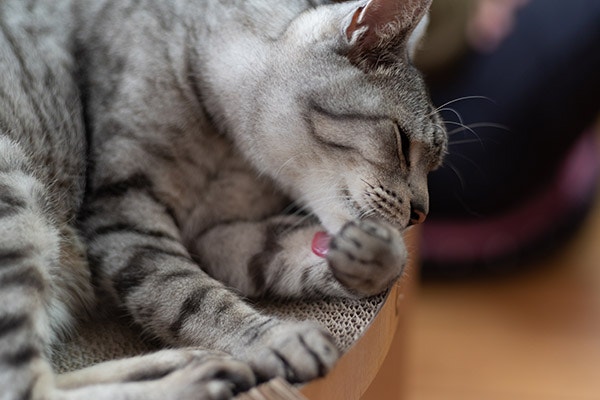
Cats take pride in grooming—a content cat is one with a sleek, well-maintained coat. Observing your cat licking its paws or fur throughout the day is expected as part of its regular cleaning habits. However, when a cat begins to groom excessively, repeatedly focusing on the same spot to the point of causing soreness, it could be a sign of underlying stress or discomfort. In this article, we’ll guide you in spotting the signs of overgrooming in cats and offer tips on addressing them to keep your cat happy and healthy.
Are you a new cat owner? Explore the friendliest cat breeds to get acquainted and build new bonds quickly.
What is excessive grooming in cats?
When a cat spends too much time licking or biting its fur, it is considered excessive grooming. This behaviour can result in bald patches, irritated skin, or ulcers. Grooming is regular, but it becomes an issue when it interferes with your cat's life.
Typical grooming practices:
- Hygiene maintenance: cats maintain hygiene by grooming themselves, particularly after feeding or sleeping.
- Social bonding: cats can form bonds and express affection by grooming each other or their owners.
- Calming and relaxation: cats who groom themselves tend to be more self-assured.
Abnormal grooming practices:
- Bald patches: notable, frequently symmetrical hair loss in particular regions. Cat's skin may also develop scabs or crusty patches as it attempts to heal, but ongoing licking can prevent this.
- Skin irritation: constant licking can cause ulcers or red, inflammatory patches. The irritated skin may become darker or redder.
- Persistent licking: a cat’s tongue is covered with hook-like structures that act as combs while grooming. While this helps with regular cleaning, persistent licking of the same area can cause fur thinning, skin irritation, or bald patches.
- Neglecting other activities: if your cat grooms excessively, it can forget to eat, play, or engage with you.
Understanding when excessive grooming becomes a concern is crucial for maintaining a cat's health. For more advice on helping your cat's well-being, read our tips on caring for your cat.
Signs of excessive grooming in cats
Early detection of cat excessive grooming symptoms can help prevent more severe problems from escalating. Observe the following crucial indicators:
- Bald patches: these are frequently the clearest indicator of overgrooming. Your cat may miss fur in easily accessible places like the sides, belly, or legs. These spots may start with thinning fur and progress to complete hair loss.
- Skin irritation: red, swollen skin or ulcers will likely appear wherever your cat overgrooms. If left untreated, this discomfort may worsen and cause bacterial or fungal infections.
- Hairballs: Excessive grooming leads to a cat ingesting loose hair, which builds up in the stomach and is expelled as hairballs. This is a natural process, but frequent hairballs can indicate your cat is overgrooming and needs attention.
- Constant licking: if your cat repeatedly becomes obsessed with grooming the same area, it is likely excessive grooming. This practice frequently results in skin irritation, hair loss, underlying discomfort, and tension that cat owners must address.
- Behaviour modifications: cat overgrooming can alleviate anxiety, agitation, and fear or react to changes in their environment. Your cat may start overgrooming as a coping mechanism or way of soothing itself to help deal with uncomfortable emotions.
If you notice any of these signs and it is not normal grooming, it can be considered unhealthy. Things to consider as potential triggers for excessive grooming include changes in the cat's environment, such as new furniture, different cleaning chemicals, or the introduction of a new baby or pet. Other factors, like fear, stress, shock from a recent event, illness, discomfort, or pain, could also contribute to this behaviour. Understanding your cat's behaviours, like why cats paw at you or who cats sit on your lap, can also provide additional insights into their overall well-being.
Common causes of excessive grooming
There are several reasons why cats might groom themselves excessively, ranging from physical pain to emotional strain. This behaviour, known as overgrooming in cats, can lead to hair loss, skin irritation, and even infections. Helping your cat resume a healthy grooming routine requires determining the root cause of this behaviour.
Physical reasons:
- Allergies: foods, surroundings, and flea bites can cause cat allergies. These allergies frequently cause itching, which prompts your cat to groom themselves excessively to relieve the irritation.
- Parasites: fleas, mites, and parasites frequently cause excessive cat grooming. Because they hurt, your cat will keep licking and biting to get some relief.
- Skin issues: your cat may groom excessively due to skin disorders such as dermatitis or fungal infections that cause it to hurt or itch.
Psychological factors:
- Stress and anxiety: a cat may become stressed out by changes in its surroundings, such as moving to a new house, getting a new companion, or even just changing the owner's routine. Excessive cat grooming is one way that this stress often shows up.
- Boredom: when cats aren't mentally or physically stimulated, they may groom themselves excessively to kill time or deal with boredom.
- Obsessive-Compulsive Disorder (OCD): cat over grooming may indicate that the cats have a disorder which leads to being forced to groom more than is required.
Addressing the physical and psychological causes of excessive cat grooming can help your cat regain a balanced, healthy lifestyle. If you’re curious about other cat behaviours, you might want to explore why cats knead.
How to stop excessive grooming in cats
To stop excessive grooming in cats, addressing the underlying cause is essential. Here are some actionable steps you can take:
- Provide a calm space: ensure your cat has a quiet, secure area away from noise and other animals.
- Use pheromone diffusers: to mimic natural pheromones to reduce stress and prevent overgrooming.
- Create a routine: regular play sessions and consistent meal times help reduce anxiety and prevent excessive cat grooming.
- Increase stimulation: engage your cat with puzzle feeders, interactive toys, and playtime to prevent boredom and distract from overgrooming.
If cat over-grooming persists, owners should consult a veterinarian. Learn more about creating a stress-free environment and improving your cat’s well-being, such as understanding why cats sleep on the bed or when cats groom each other.
Conclusion
Cat excessive grooming is more than just a behaviour problem; it is frequently a symptom of underlying health or psychological issues. By recognising the reasons and taking the necessary steps, you can assist your cat in resuming a regular, healthy grooming habit. Regular monitoring, a stress-free environment, and veterinarian advice are essential for successfully regulating this habit.
Remember that your cat's well-being is vital. Proactively reducing excessive cat grooming will also help you bond and develop a connection. Explore our comprehensive list of ways to manage clingy cats to help your cat feel more secure and balanced.
Frequently asked questions (FAQ)
Here are some typical responses for new cat owners that address excessive grooming problems.
Why is my cat frantically grooming?
Over grooming in cats frequently indicates stress or pain, which environmental changes, skin irritation, or anxiety can cause. This behaviour could signal that your cat is dealing with something upsetting. It is critical to regularly monitor your cat and determine the leading cause of the stress caused by the cat's excessive grooming.
Why is my cat excessively licking himself?
Excessive licking in cats can indicate an underlying health issue, such as allergies, parasites, or skin conditions. This behaviour might also be your cat's way of coping with stress or anxiety. If you notice your cat engaging in frequent, persistent licking, it’s essential to consult a veterinarian. A thorough examination can help identify the exact cause of this behaviour, allowing you to understand cat over grooming.
Do cats over groom when in pain?
Yes, over grooming in cats while in pain is prevalent if it is localised. This behaviour is frequently used as a coping mechanism to soothe themselves. If you observe your cat grooming a particular region more than usual, it may be due to another underlying issue, such as an injury. Understanding other feline behaviours, such as why cats wag their tails, can also help you better understand your cat's overall behaviour.
How much grooming is too much for a cat?
Cat over grooming becomes excessive when it causes bald patches and skin discomfort or consumes a considerable portion of the day. If you see any of these symptoms, you should take action. Furthermore, understanding other behaviours, such as cats grooming each other or why cats lick, can reveal more profound insights into their social dynamics and emotional state.