Written in collaboration with vets
- Homepage
- Blog
- Bonding & Care
- Cat Sleeping On Bed Test
Cat Sleeping In Bed With You: Comfort, Trust & What It Means

 Share
- Cats sleep in their owner’s beds for warmth, security, and scent, and it’s usually a sign of high trust and affection.
- Cats will often sleep with their favourite person. This is whomever they feel safest or most comfortable around.
- Allowing your cat to sleep in your bed can strengthen your bond, reduce stress for both of you, and calm you down with the soothing sound of your cat’s purring.
- Different sleeping positions have different meanings, with a cat sleeping near your head indicating high trust and nearer your feed indicating more independence, for example.
- The only downside to sharing your bed with a cat is that it can cause sleep disruption and may trigger allergies for some.
Cats are intrinsically cosy, and with their soft coats, vibrating purrs, and radiating warmth, some cat parents may welcome their cat sleeping in their bed. If you’re wondering ‘why does my cat sleep in my bed?’ There are many reasons, varying from comfort and companionship to establishing security and territory. In this article, we help you understand why your cats sleep on your bed, the pros and cons of this behaviour, and how you can create a cosy bed environment for them. By understanding the benefits behind your cat's behaviour, cat parents can make an informed decision whether their cat sleeping on the bed is something that suits them.
Why does my cat sleep next to me?
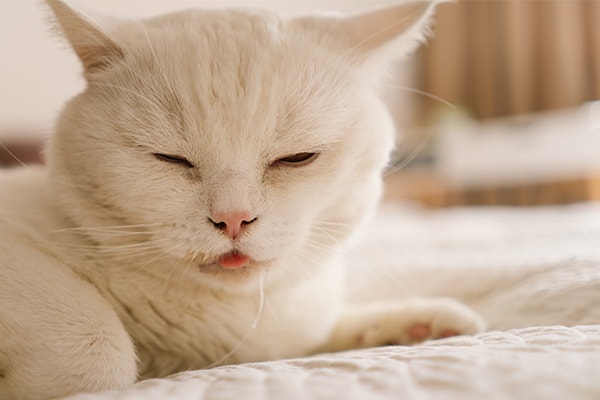
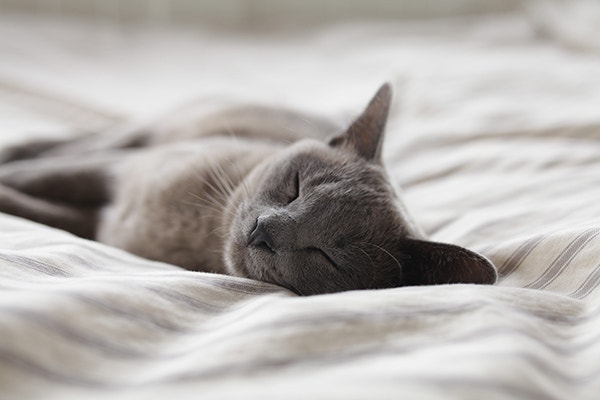
When a cat sleeps next to you in bed, it’s usually because they love you and are showing their affection. Sleeping together is a way for cats to bond and spend quality time with their owners. However, your cat could be marking their territory, staying safe from danger, or simply enjoying the comfort and warmth of you and your bed.
We look at some of these reasons in more detail below:
Your cat is showing affection
While many people misunderstand cats to be aloof, they are actually very affectionate animals. One of the reasons why your cat sleeps in your bed is because they feel content in your presence. If you are responsible for taking care of your cat’s daily needs, they’ve learned to rely on you and have therefore developed a strong bond with you. Sleeping together allows cats to be physically close to their human companions, which releases oxytocin in both, and strengthens the human-feline bond.
Your cat is seeking safety
Your cat may also sleep on your bed because they need a sense of security as part of their natural instincts. Cats feel most vulnerable when they are sleeping at night as their guard is down, which increases the chance of being attacked by a predator. While there is no predator in your home, by sleeping in your bed, your cat trusts that you will protect them. Cats also enjoy sleeping at a height as it gives them a vantage point and makes them feel safer than sleeping on the floor and therefore allows them to relax and rest.
Your cat enjoys your warmth
With a body temperature of around 38°C, cats are able to appreciate warmer environments than humans. And since cats love to be cosy when they sleep, they’ve probably already scoped out the warmest places to nap in your home and found your bed to be the best. When sleeping in your bed, cats can absorb your body heat and stay warm. If you’re wondering why cats sleep at the foot of the bed, it could be because it gets too hot in the bed during the night, whereas it’s a little cooler near your feet.
Your cat is drawn to your scent
You sleep in your bed every night, so it’ll come as no surprise to learn it has the strongest concentration of your scent in your entire home. That’s why cats, who boast a powerful sense of smell, are drawn towards it, as they’ve come to associate you and your scent with affection, safety, and security.
Your scent on the bed reassures your cat and allows them to mix their own scent with yours through chin rubs and kneading.
Do cats sleep with their favourite person?
So, why do cats like to sleep with their owners? Well, cats likely sleep with their favourite person, especially if they take care of their daily needs. Cats feel most vulnerable when sleeping, and so will curl up next to the person they love and trust the most. In the wild, bonded cats will sleep next to each other - and this could be the same for human-feline companionships.
Your cat is more likely to sleep with the person that they feel most safe, comfortable and happy around. Whether this is the person who feeds them, plays with them and/or pets them will also have an impact. Cats also sleep on your bed as a way to mark their territory and claim you as their own. If you’re not chosen as a sleep companion, and want to be, you can learn more about how to get a cat to like you.
Should you let cats sleep in your bed?
Whether or not you let your cat sleep in your bed is your choice and depends on your personal preference and your cat’s behaviour, and there are many pros and cons either way. While sleeping on your bed is part of how cats show affection and love, there’s also the risk of your cat disrupting your sleep at night.
As crepuscular animals, cats tend to be more active at night. If you’re a light sleeper, you may be bothered by your cat exploring your room; you may even wake with the thuds of your cat jumping on and off your bed. Some cat parents may also have allergies, and if a cat sleeps on your bed, this is bound to leave hairs that may be bothersome. Others may worry about hygiene or muddy paws on the bed. Cat parents should decide whether or not a cat sleeping on their bed is suitable for them by weighing up the pros and cons.
Can sleeping on the bed benefit cats?
Cats sleeping on the bed can be beneficial for them in many ways. Sleeping together means your cat is physically close to you, which can strengthen the human-feline bond by increasing your emotional connection and creating a sense of togetherness. While cats are independent creatures, they value the company of their human companions as it brings them comfort and security. This can help reduce any stress or anxiety your cat is experiencing and improve their mental health. In turn, this enables your cat to relax and sleep better, which can improve their physical health too.
Cat sleeping positions in bed and what they mean
Now that you know why your cat sleeps next to you, it may be useful to learn what different sleeping positions mean for your cat:
- Near your head or pillow – This indicates high trust and a desire to be close to your scent.
- On your chest – Your cat is seeking warmth and comfort from your heartbeat.
- At your feet – This is a sign of independence, with your cat allowing themself a quick escape route, or they may simply enjoy the cooler temperature.
- Curled in a ball or loaf – This is for conserving heat and protecting vital organs.
How can you create a cosy bed environment for your cat?
Since cats can sleep up to 18 hours a day, an important part of caring for a cat is to create a comfortable environment for them to relax. If you’re happy for your cat to sleep on your bed, there are ways that you can make it more cosy for them. You could cover your bed in soft blankets so it’s more pleasant for your cat to lay down and rest. If your cat has its own cat bed, you could place this on or next to your bed, so they have their own designated sleeping space while sleeping near you. Also, try and place personal items on your bed, such as a t-shirt or pillow, as the familiar scent will also foster your cat’s comfort. Some cats prefer sleeping alone, so you should never force your cat to sleep on your bed, but you can follow these tips to make it more inviting for your feline companion.
However, some cat parents may not want their cat to sleep on the bed with them. This could be due to being disturbed at night, hygiene, allergies or just personal preference. In this case, cat parents should create a dedicated sleeping space for their cat in another area of the house. It’s important to make this space comfortable and inviting for your cat by using a cat bed or blankets, as well as soft cat toys. You may also want to place it somewhere off the floor, as cats prefer the height, and in a warm and cosy area - such as near the radiator. Positive reinforcement can also teach your cat that sleeping in their space is a desirable behaviour, so offer treats and praise whenever they do so.
Cats show their affection in unique ways, and understanding these behaviours can reassure cat parents that as much as we love our cats, they love us too. The ultimate answer to ‘why do cats sleep on your bed?’ is because they feel content around you and want to engage in their favourite activity together: sleeping! Another activity that cats love is eating - and you can love your cat even more by feeding them Sheba® Wet Cat Food. With a range of tasty flavours, Sheba® Wet Cat Food contains essential vitamins and minerals to provide a complete and balanced diet for your cat. By serving a high-quality and mouth-watering diet, your cat will know that you love them too.
Cat sleeping in the bed - FAQs
Can I get worms from my cat sleeping in my bed
Yes, you can get worms from sharing your bed with your cat, though it is highly unlikely, especially if your cat is healthy and regularly dewormed. It’s even more unlikely if they are an indoor-only cat, too.
Is it okay for cats to sleep in my bed?
Absolutely! Sharing your bed with your cat can strengthen your relationship and can help to reduce stress in both of you. The only downsides are for light sleepers who may have their sleep disrupted or for those prone to allergic reactions.
Where is the best place for a cat to sleep at night?
The best place for a cat to sleep at night is simply somewhere warm, quiet, and secure. This could be their own cat bed or an enclosed perch, or it could be on the end of your bed or beside you on a pillow.